
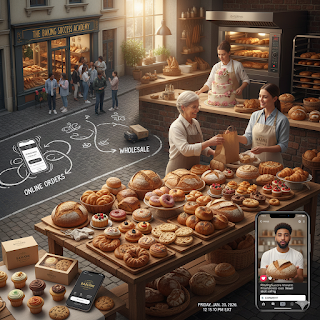
A Complete Guide to Baking Success
Introduction: Why a Bakery Business Still Works
Bread. Cakes. Biscuits. Mandazi. Doughnuts. Chapati. Scones. Muffins. These are not just foods they are woven into the fabric of daily life across every culture, every neighborhood, every income level. Whether rich or poor, urban or rural, in Lagos or London, Nairobi or New York, people eat baked goods almost every single day. It’s this universal, constant demand that has allowed bakeries to survive not just decades but centuries, outlasting countless business trends and economic upheavals.
Think about it. When was the last day you went without encountering bread in some form? For most people, it’s nearly impossible to remember. Bread appears at breakfast as toast, at lunch in sandwiches, at dinner alongside soup or stew. Cakes mark our celebrations birthdays, weddings, graduations, promotions. Snacks like doughnuts and pastries fuel our mid-morning coffee breaks and afternoon energy slumps. This isn’t a trend that will fade with the next viral sensation or technological disruption. This is fundamental human need meeting cultural tradition.
That’s why bakeries remain among the most profitable and resilient small businesses worldwide, even as shopping malls close and retail struggles to compete with online commerce. You can’t download fresh bread. You can’t stream a birthday cake. You can’t get the warm, comforting smell of baking from your phone screen. The bakery business is beautifully, stubbornly physical and local, which in our increasingly digital world has become a competitive advantage rather than a weakness.
Currently, starting a bakery doesn’t mean you need a giant factory with industrial ovens, a team of trained bakers, or millions in capital sitting in your bank account. With modern tools that have become remarkably affordable, accessible equipment designed specifically for small-scale bakers, social media marketing that costs nothing but your time and creativity, and delivery apps that connect you instantly to thousands of potential customers, even a home-based baker working from their kitchen can build a thriving business that generates serious income.
The barriers to entry have never been lower, while the potential rewards remain as high as ever. People who started baking during the pandemic as a hobby discovered they could turn their passion into profit. Mothers who once only baked for family birthdays found themselves running successful cake businesses from home. Young entrepreneurs with minimal capital but maximum creativity have built bakery brands that rival establishments that have been around for decades.
If you’ve ever dreamed of turning your love for baking into income, of being your own boss, of filling your community with the irresistible aroma of fresh bread, of seeing people’s faces light up when they taste something you created with your own hands, then now is absolutely the time. The market is ready, the tools are available, and the path forward is clearer than it’s ever been.
This comprehensive guide will take you step by step through everything you need to know to start and grow a successful bakery business. From choosing your specific niche in the vast world of baking to buying the right equipment without overspending, from pricing your products for profit to attracting loyal customers who come back week after week, month after month, year after year. Whether you want to bake from home as a side business or open a full commercial bakery that employs a team, the principles of success remain the same, and you’re about to learn them all.
Step 1: Decide What Kind of Bakery You Want to Run
Before you start mixing flour and sugar, before you buy a single piece of equipment or ingredient, you need to make a crucial decision about your bakery model. This choice will determine your startup costs, your daily operations, your target customers, and your growth trajectory. There’s no single right answer here the best model is the one that fits your resources, skills, lifestyle, and local market conditions.
The Home-Based Bakery: Starting Where You Are
The home-based bakery represents the lowest-risk entry point into the baking business. You bake from your own kitchen, selling through word-of-mouth recommendations, social media platforms, and increasingly through delivery apps that have made home-based food businesses more viable than ever before. The startup costs are minimal because you already have the basic infrastructure a kitchen, an oven, running water, electricity. You’re simply optimizing and expanding what you already possess rather than building from scratch.
This model appeals particularly to people who want to test the waters without quitting their day jobs, mothers who need flexibility to care for children, retirees looking for meaningful and profitable activities, or anyone who wants to start a business without taking on debt or major financial risk. You can bake in the evenings or on weekends, take orders that fit your schedule, and grow at a pace that feels manageable rather than overwhelming.
However, home-based baking requires excellent hygiene standards and attention to food safety regulations. Your kitchen must be impeccably clean, ingredients properly stored, and finished products safely packaged. Depending on your country or local regulations, you may need to register your business, obtain health permits, or meet specific kitchen requirements. Some jurisdictions require home bakers to use a separate, dedicated kitchen space rather than the same kitchen where family meals are prepared. Research these requirements early starting legally from day one protects you from fines, lawsuits, and the heartbreak of building a customer base only to be shut down for operating without proper permits.
The beauty of home-based baking is that it can remain comfortably small and profitable, or it can serve as the launching pad for something much larger. Many successful commercial bakeries started in someone’s home kitchen, with a single oven and one person’s determination to make exceptional baked goods.
The Small Physical Bakery Shop: Building Local Presence
Opening a small physical bakery shop means renting or purchasing a commercial space, installing proper equipment, and selling directly to walk-in customers who are attracted by your storefront, your signage, your window displays, and most powerfully, the intoxicating smell of fresh baking that draws people in like a magnet. There’s something irreplaceable about a physical bakery presence the ability to see and smell products before buying, to chat with the baker, to become part of a daily ritual of stopping for fresh bread on the way home.
The startup costs for a physical shop are significantly higher than home-based baking. You’ll need to cover rent deposits, often three to six months upfront, commercial-grade equipment that meets health department standards, furniture and display cases, signage and branding, and potentially renovations to meet building codes. You’ll also face ongoing monthly expenses for rent, utilities, insurance, and possibly employee salaries that continue whether you sell a lot or a little.
However, these higher costs come with substantial advantages. Physical visibility generates walk-in traffic from people who had no intention of buying baked goods until they saw your shop and smelled your products. You can serve customers immediately rather than relying entirely on pre-orders and delivery. You create a community gathering place where regulars become friends, where you hear directly what customers love and what they wish you’d make, where you build a brand presence that transcends social media algorithms.
The location of your physical shop matters enormously. A bakery on a busy street with heavy foot traffic, near schools or offices where people pass daily, or in a neighborhood underserved by quality bakeries, can thrive while an identical bakery on a quiet side street struggles. Before signing any lease, spend time observing potential locations at different times of day and different days of the week. Count foot traffic. Notice competing businesses. Talk to other shop owners about their experiences. The few hours you invest in location research could determine whether your bakery succeeds or fails.
The Online Bakery: Digital-First Baking
The online bakery model has exploded over the past five years, accelerated dramatically by pandemic lockdowns that forced businesses to innovate or die. This model means you have no physical shop at all you bake from a commercial kitchen or permitted home kitchen and deliver directly to customers who order through WhatsApp, Instagram, Facebook, your website, or food delivery platforms. Your entire storefront is digital, existing as beautiful photos, engaging videos, customer testimonials, and the reputation you build through consistent quality.
The advantages are compelling. You avoid expensive retail rent, you can operate from a lower-cost location since customers never visit, you can reach customers across a wide geographic area rather than depending on foot traffic to a single location, and you can run your entire operation lean and efficient with minimal overhead. Some of the most successful bakeries in urban areas today are online-only operations run by skilled bakers who realized they could make more money and reach more customers without the burden of a retail storefront.
However, online-only bakeries face their own challenges. You must be exceptional at digital marketing and photography because customers can’t see or smell your products in person they buy based entirely on your photos, descriptions, and reviews. You need reliable delivery systems, whether that’s personal delivery, partnerships with delivery services, or organized pickup points. You must manage orders efficiently, often juggling dozens of custom requests for different pickup times and locations. And you face intense competition because your potential customers can easily browse dozens of other bakeries without ever leaving their phones.
Success as an online bakery requires treating your social media presence as seriously as a traditional baker treats their storefront. Your Instagram feed must be a gallery of mouthwatering images. Your WhatsApp business catalog must be professionally organized with clear pricing. Your Facebook page must be actively managed with prompt responses to inquiries and regular posts that keep you top-of-mind. You’re not just a baker you’re a content creator, a digital marketer, a logistics coordinator, and a customer service representative, all wrapped into one.
The Specialized Bakery: Mastering a Niche
Specialized bakeries focus narrowly on specific products or occasions rather than trying to be everything to everyone. Wedding cake bakeries, birthday cake specialists, vegan and gluten-free bakeries, artisan sourdough bread makers, French pastry shops these businesses succeed by becoming known as the absolute best at their particular niche. When someone wants that specific thing, they think of you first, they’re willing to pay premium prices, and they often travel further or wait longer because you can’t be easily substituted.
The beauty of specialization is reduced competition and higher profit margins. If you make custom wedding cakes, you’re competing with perhaps five or ten other bakeries in your city rather than every bakery and supermarket. If you’re the only gluten-free bakery in your area, every celiac customer and gluten-sensitive household becomes your potential customer with few alternatives. Specialization allows you to charge prices that reflect your expertise and the difficulty of what you do, rather than competing on price with mass-market producers.
However, specialization also means dealing with seasonal fluctuations and feast-or-famine cycles. Wedding cake bakers stay frantically busy during wedding season and struggle during slow months. Birthday cake specialists see predictable weekly demand but face intense weekend rushes followed by quiet weekdays. The narrower your niche, the more important it becomes to diversify revenue streams, build a loyal repeat customer base, and potentially offer complementary products that smooth out income fluctuations.
Many specialized bakeries succeed by combining their specialty with broader offerings. A wedding cake specialist might also sell cupcakes and pastries for everyday orders. A sourdough bread expert might offer bread-making classes and sell baking supplies. A vegan bakery might operate a small cafe where customers enjoy coffee alongside their pastries. This hybrid approach captures the benefits of specialization reputation, premium pricing, differentiation while mitigating the risks of overly narrow focus.
The Wholesale Bakery: Volume and Stability
Wholesale bakeries supply bread, buns, pastries, or snacks to schools, restaurants, hotels, shops, cafes, and supermarkets. Instead of selling individual loaves to consumers, you sell hundreds of loaves to businesses that then resell or serve them. This model requires bigger equipment, more production capacity, reliable delivery vehicles, and the ability to meet consistent quality standards and delivery schedules. You’re entering a B2B world where contracts, invoices, payment terms, and professional relationships determine your success more than marketing creativity or social media presence.
The advantages are substantial and attractive to business-minded bakers. Wholesale provides large, predictable orders once you secure a contract with a restaurant or school, you might bake and deliver the same products on the same schedule for months or years. You’re not constantly hustling for individual customers; you’re managing a smaller number of business relationships that generate steady volume. Your production can be streamlined and efficient because you’re making the same items repeatedly rather than custom orders. And you can achieve economies of scale on ingredients, equipment, and labor that small-batch retail baking simply cannot match.
However, wholesale baking operates on thinner margins than retail. The restaurants and shops you supply expect wholesale pricing significantly below retail, often 40-60% less, because they’re buying in volume and need to mark up products for their own profit. This means you need real volume to make money baking ten loaves for a cafe won’t pay the bills, but baking two hundred loaves for five cafes plus a school might. You also face payment delays, with many businesses paying on 30-day terms, requiring you to manage cash flow carefully and potentially need working capital to cover ingredients and expenses before you receive payment.
Wholesale bakeries succeed by being absolutely reliable, consistently good, and easy to work with. Restaurant owners and shop managers value suppliers who show up on time every single time, who maintain quality without surprises, who communicate proactively about any issues, and who work collaboratively to solve problems. Build this reputation, and you’ll find business clients actively recommend you to others, stay loyal even when competitors offer lower prices, and grow their orders as their own businesses expand.
Step 2: Do Market Research Like Your Success Depends on It (Because It Does)
Before you invest money in equipment, ingredients, or rent, before you commit to a particular bakery model or product focus, you absolutely must study your local market thoroughly and honestly. More bakeries fail from poor market understanding than from poor baking skills. You might make the most delicious cakes in the world, but if nobody in your area buys cakes, or if they only buy from the bakery that’s been there for thirty years, or if they expect prices you cannot profitably charge, your delicious cakes won’t save you.
Start by observing what people actually buy rather than what you think they should buy or what you want to make. Visit local markets, watch which bakery stalls have long lines and which have sparse customers. Note what products sell out quickly and what remains unsold at the end of the day. Visit competing bakeries at different times early morning, midday, evening and watch what customers purchase. Are people buying bread for home consumption or snacks to eat immediately? Do they order custom cakes or buy ready-made products? What price points do they accept without hesitation versus what causes them to walk away?
Talk to potential customers, ideally in informal settings where they’ll give honest rather than polite answers. Ask friends, family members, colleagues, and neighbors what they currently buy, where they buy it, what they wish they could find but can’t, and what they’d be willing to pay for various products. Conduct informal surveys through WhatsApp groups or Facebook polls. The key is getting past people’s tendency to be encouraging and supportive you need truth, not kindness. You want to hear “I buy bread every day from the corner shop for 50 shillings and I wouldn’t pay more unless it was noticeably better” rather than “your bread would be wonderful, I’m sure I’d buy it” which sounds supportive but provides zero useful market information.
Identify gaps in your market where customer demand exceeds current supply. Perhaps everyone sells white bread and mandazi, but nobody offers whole grain, seeded bread for health-conscious customers. Maybe birthday cakes are available everywhere, but custom wedding cakes require traveling to the next town. Possibly the local Ethiopian or Indian community wants traditional baked goods from their culture that nobody supplies. These gaps represent opportunities where you can enter the market with less direct competition and potentially charge premium prices because you’re meeting unmet needs.
Study your competitors not to copy them but to understand how you’ll differentiate yourself. Make a spreadsheet listing every bakery in your area, their locations, their main products, their approximate prices, what they do well, and where they fall short. Are they all operating from shops while nobody does home delivery? Do they focus on basic items while ignoring specialty products? Do they have poor packaging while you could excel at presentation? Understanding the competitive landscape helps you find your unique position the specific way you’ll be different and better that gives customers a reason to choose you over established alternatives.
Consider where and how you’ll sell before you produce anything. Will you sell directly to consumers through walk-in traffic, delivery, farmers markets, or online orders? Will you sell wholesale to other businesses? Will you do both? Each channel has different requirements, margins, logistics, and challenges. Selling directly to consumers offers higher margins but requires individual customer acquisition and smaller transaction sizes. Selling wholesale means lower margins but larger, more predictable orders. Understanding your sales channels early shapes everything from your production capacity to your pricing to your marketing strategy.
Step 3: Calculate Startup Costs Honestly and Completely
One of the most common and costly mistakes new bakers make is underestimating their true startup costs. They calculate the cost of an oven and some ingredients, figure they can start for a few hundred dollars, then find themselves running out of money halfway through their first month when they discover all the additional expenses they failed to anticipate. Creating a comprehensive, realistic budget protects you from this painful surprise and helps you determine whether you have enough capital to start, whether you need to scale down your plans, or whether you should save more money first.
For a basic home bakery setup working from your existing kitchen, you’re looking at several essential categories of expense. The oven situation depends on what you currently have if your home oven is adequate for your initial production volume, you save significantly, but if you need a larger or more professional oven, expect to invest anywhere from two hundred to six hundred dollars for a quality home oven or up to several thousand for a small commercial convection oven. Baking tools including stand mixers (which save enormous time and physical labor), various sized pans and trays, measuring cups and spoons, cooling racks, spatulas, piping bags for cake decoration, and other essentials will run one hundred to three hundred dollars if you’re starting from scratch, though you might already own some basics.
Initial ingredients for your first production runs flour, sugar, butter, eggs, yeast, baking powder, salt, flavorings, decorations will cost one hundred to two hundred dollars depending on your planned volume and menu. This might sound modest, but remember this is just your initial stock; ingredient costs continue as your largest ongoing expense. Packaging supplies deserve more attention than most beginners give them because packaging heavily influences perceived quality and justifies premium pricing. Good boxes, bags, labels with your logo, tissue paper, ribbons for cakes, bread bags allocate fifty to one hundred dollars initially and budget for ongoing packaging costs that can represent 10-15% of your product prices.
Marketing expenses for a home bakery might be minimal if you’re relying on free social media and word-of-mouth, or could reach a hundred dollars or more if you’re printing flyers, business cards, banners for markets, or running Facebook and Instagram ads. Don’t underestimate the value of professional branding even a well-designed logo and basic marketing materials created through freelance platforms can dramatically improve your perceived professionalism and justify higher prices. Add it all up, and starting a home bakery typically requires five hundred to thirteen hundred dollars in initial investment, which is affordable for many aspiring bakers, though you’ll also need working capital to cover ingredients and expenses during your first months before profits become consistent.
For a small shop bakery, the financial requirements multiply significantly. Commercial rent varies wildly by location, but expect to pay first month’s rent plus security deposits totaling two to three months rent upfront. In a modest neighborhood location, this alone might be one to three thousand dollars before you’ve bought a single piece of equipment. Commercial ovens suitable for a small bakery start around one thousand dollars and can reach five thousand or more for professional multi-rack convection ovens. You’ll need commercial refrigeration to store ingredients and finished products safely, costing three hundred to seven hundred dollars for basic units. Display cases to showcase your products attractively run several hundred to several thousand dollars depending on size and quality.
Don’t forget less obvious expenses like business registration and licenses, health department permits, liability insurance, initial utility deposits, signage for your storefront, furniture if you’re including seating, a point-of-sale system or cash register, and potentially small wares like serving trays, tongs, and paper goods for customers. If you’re hiring staff, you need capital to cover their salaries until revenue grows sufficient to pay them from operating income. All together, opening a small commercial bakery shop typically requires three thousand to ten thousand dollars minimum, and realistically more like ten to twenty thousand to do it properly with adequate working capital reserves.
These numbers shouldn’t discourage you but rather help you plan realistically. If you don’t currently have adequate capital for a commercial shop, starting from home allows you to build capital through profits before expanding. If you have access to capital through savings, family loans, or small business financing, understanding true costs prevents underfunding your business and running out of money mid-launch. Whatever path you choose, accurate financial planning is the foundation of sustainable business growth.
Step 4: Essential Equipment for Your Bakery
You don’t need to buy everything at once, and you definitely shouldn’t make the classic mistake of spending all your capital on equipment before you’ve proven your business model and built consistent revenue. Start with absolute essentials, operate within your current capacity, and upgrade systematically as growing sales justify and fund better equipment. This patient approach preserves cash, reduces financial stress, and ensures you buy equipment based on actual needs rather than imagined ones.
The oven represents the heart of any bakery, the one piece of equipment you absolutely cannot avoid. Choosing the right oven depends on your production volume, available space, and budget. For home bakers just starting, your existing home oven might be adequate for initial orders of a dozen cupcakes or a few loaves of bread. As you grow, a large-capacity home convection oven provides better results and higher volume while still operating on standard household electrical service. When you’re consistently maxing out home ovens and turning down orders, or when you move to commercial space, commercial-grade convection ovens offer the capacity, consistency, and durability to support serious production volumes.
A stand mixer transforms baking from exhausting physical labor to manageable pleasure. Hand-mixing small batches is doable, but hand-mixing bread dough for fifty loaves or cake batter for a dozen cakes will leave you exhausted and potentially injured from repetitive strain. Quality stand mixers from established brands cost several hundred dollars but last for years of intensive use. They mix thoroughly and consistently, free you to work on other tasks while mixing happens, and come with attachments for various purposes. If your budget absolutely cannot accommodate a stand mixer initially, start small with batches you can mix by hand, but prioritize buying a mixer as soon as cash flow allows.
Measuring tools might seem minor but accuracy is absolutely critical in baking, unlike cooking where you can improvise and adjust as you go. Baking is chemistry ratios matter, precision matters, and sloppy measuring produces inconsistent results that frustrate customers and damage your reputation. Invest in quality measuring cups, measuring spoons, and ideally a digital kitchen scale for weighing ingredients by mass, which provides better accuracy than volume measurements. Professional bakers work almost entirely by weight, following recipes that specify “300 grams flour” rather than “2.5 cups flour” because weight measurements eliminate variables like how compacted flour is in the cup.
Pans and trays in various sizes and types enable you to produce diverse products. Bread loaf pans, muffin tins, cake rounds in multiple sizes, sheet pans for cookies and pastries, specialty pans for bundt cakes or tarts build your collection based on your actual menu rather than buying everything speculatively. Start with what you need for your core products and add specialized pans when customer demand justifies them. Choose quality over quantity; a few sturdy commercial-grade pans last longer and perform better than many cheap ones that warp, stick, or rust quickly.
Cooling racks are essential for preventing soggy bottoms and condensation that ruins texture and presentation. Pulling hot baked goods from the oven and immediately packaging them steams them and destroys the crumb texture and crust you worked to achieve. Proper cooling on racks allows air circulation, moisture escape, and gradual temperature reduction. This seems like a small detail but it’s the difference between professional results and amateur products.
Packaging supplies with your branding transform good products into marketable products that customers proudly carry, photograph for social media, and remember when they need to order again. Beautiful boxes for cakes, attractive bags for bread, labels with your logo and contact information, ribbons and finishing touches these aren’t frivolous extras but rather essential marketing investments. People absolutely judge products by packaging, they’re more willing to pay premium prices for beautifully packaged goods, and attractive packaging generates organic marketing through social media posts and word-of-mouth. Budget meaningfully for packaging and treat it as seriously as you treat recipe development.
As you grow and profits accumulate, consider optional upgrades that increase capacity, improve efficiency, or enable new products. Cake decorating kits with professional tips, airbrushes, and fondant tools open wedding and specialty cake markets. Display shelves and cases make retail operations more attractive and professional. A delivery vehicle even just a motorcycle or bicycle with a cargo box expands your geographic reach. Online ordering systems integrated with your website or social media streamline order management and reduce errors. Each upgrade should be justified by clear business needs and funded by profits rather than debt.
Step 5: Perfect Your Recipes Through Relentless Testing
Success in the bakery business depends fundamentally on taste and consistency. Everything else marketing, packaging, pricing, location matters greatly, but it’s all built on the foundation of products that taste delicious and deliver the same quality every single time. Customers might forgive late delivery once or accept less-than-perfect packaging occasionally, but they won’t forgive products that taste mediocre or vary wildly from one batch to the next. Your reputation is made or broken one bite at a time.
Test your recipes extensively before accepting your first customer order. Bake each product multiple times, adjusting ingredients, techniques, and timing until you consistently achieve the flavor, texture, and appearance you want. This testing phase feels expensive and wasteful when you’re eating or giving away batch after batch, but it’s actually the cheapest marketing investment you’ll ever make because it ensures your first customers receive excellent products that make them want to order again and tell their friends.
Keep your recipes relatively simple but make them uniquely yours. You don’t need to reinvent baking or create never-before-seen flavor combinations you need to do familiar things exceptionally well with perhaps one signature twist that makes you memorable. Maybe your chocolate chip cookies are recognizably chocolate chip cookies but you add a hint of espresso that deepens the chocolate flavor. Maybe your banana bread includes toasted walnuts and a cream cheese swirl. Maybe your dinner rolls have honey butter baked right in. That small distinctive touch becomes your signature, your talking point, the thing customers mention when they recommend you.
Resist the temptation to offer an enormous menu when you’re starting. New bakers often think more variety attracts more customers, but the opposite is usually true. A menu with fifty items suggests lack of focus, creates quality control problems, requires maintaining huge ingredient inventories, complicates production scheduling, and dilutes your expertise across too many products. Instead, start with three to five excellent core products that you can make perfectly, consistently, and efficiently. Master those, build your reputation, achieve smooth operations, then thoughtfully add items based on customer requests and market opportunities. Many successful bakeries built empires on just a few signature items done to absolute perfection.
Modern health consciousness creates opportunities for bakers willing to develop better-for-you options. Whole grain bread, reduced-sugar treats, gluten-free products, dairy-free and vegan baked goods, items made with alternative sweeteners or healthy fats these aren’t niche products anymore but rather mainstream demands from substantial customer segments. You don’t need to abandon traditional favorites, but including some healthier options expands your market, commands premium prices, and differentiates you from competitors still only offering conventional products. The customer who can only eat gluten-free becomes a loyal, grateful customer when you’re the only bakery reliably serving their needs.
Document your recipes meticulously in a recipe book or digital file with exact measurements, detailed procedures, timing specifications, and notes about common problems and solutions. This documentation serves multiple purposes: it ensures consistency when you’re training employees, it allows you to scale recipes mathematically when you need larger batches, it helps you reproduce successes and avoid repeating failures, and it creates a valuable business asset that could be sold or franchised in the future. Professional bakers treat recipes as carefully as lawyers treat contracts as foundational documents that shouldn’t be left to memory or improvisation.
Step 6: Pricing Your Products for Profit, Not Just Sales
Pricing represents one of the most psychologically difficult and strategically important decisions you’ll make. Price too high and customers disappear, leaving you with beautiful products nobody buys. Price too low and you stay busy while slowly going bankrupt, discovering too late that you’re working eighty hours per week for less than minimum wage. Finding the profitable middle ground requires understanding your true costs, knowing your market, valuing your time, and having the confidence to charge what your work is worth.
Start by calculating the complete cost of producing each item. The most obvious cost is ingredients flour, sugar, butter, eggs, flavorings, and everything else that goes into the recipe. Measure and cost every ingredient precisely; surprises hide in small expensive ingredients like vanilla extract, saffron, or specialty chocolate that seem minor but significantly impact costs. Include packaging costs for boxes, bags, labels, ribbons, and any other materials that leave with the customer. Factor in overhead costs including electricity or gas for baking, water for cleaning, equipment depreciation, rent if applicable, marketing expenses, licensing and insurance, and any other business expenses. Don’t forget to pay yourself—your time and labor have value even if you’re the owner.
Once you know your total cost per item, apply an appropriate markup to ensure profit. Most successful bakeries aim for 300-500% markup on ingredients alone, meaning if ingredients cost one dollar, the selling price is three to five dollars. This might sound excessive until you realize that ingredients typically represent only 20-30% of your total costs once you include labor, overhead, packaging, and marketing. A simpler approach is ensuring your final price covers costs and leaves 30-50% gross profit margin. If an item costs you five dollars all-in to produce and deliver, selling it for seven-fifty gives a 33% gross margin while eight dollars yields 37.5%.
However, cost-plus pricing represents only the starting point. You should also practice market-based pricing where you charge what customers are willing to pay based on perceived value, quality, convenience, and emotional satisfaction. People don’t just pay for flour and sugar mixed according to a recipe; they pay for your skill and experience, for convenience and time savings, for celebration and joy, for status and presentation. A beautifully decorated birthday cake priced at fifty dollars isn’t expensive if it makes a child’s party magical and saves the parents hours of stressful work. Artisan bread at four dollars per loaf isn’t overpriced if it’s demonstrably better than supermarket bread at two dollars and the customer values quality.
Study what competitors charge, but don’t automatically match their prices especially if you offer superior quality, better service, unique products, or more convenient access. Being the cheapest rarely leads to prosperity because there’s always someone willing to go cheaper, triggering a race to the bottom where nobody makes money. Instead, aim to be the best value—the bakery where customers feel they receive quality and service worth more than what they paid. That calculation includes not just the product but the entire experience: how easy you are to order from, how beautifully you package items, how reliably you deliver, how warmly you interact, how well you handle problems.
Remember that pricing isn’t permanent or uniform. You can test different price points, offer premium pricing for rush orders or custom work, provide modest discounts for bulk orders, adjust prices seasonally based on ingredient costs and demand, and create product tiers at different price levels that let customers self-select based on their budgets and preferences. Basic chocolate cake might be twenty dollars while the same cake with custom decoration is forty dollars and a three-tier wedding cake version is two hundred dollars. Same core product, different complexity and value, different prices.
Don’t apologize for your prices or feel guilty charging what your work is worth. If customers consistently buy without hesitation, you might be underpriced. If nobody buys, you might be overpriced or your value proposition needs strengthening. The right price is the one that generates the sales volume you want at the profit margin you need to sustain and grow your business. That varies enormously by location, market, product, and positioning.
Step 7: Marketing Your Bakery Like Your Success Depends on It
Even if your cakes taste like heaven, your bread has the perfect crust, and your cookies are the best anyone has ever tasted, none of it matters if nobody knows you exist. Marketing isn’t optional for bakeries anymore; it’s the lifeblood that keeps orders flowing, customers coming back, and your business growing. The good news is that baked goods are inherently visual, emotional, and shareable, making them perfect for modern marketing approaches that cost little but time and creativity.
Social media marketing, particularly Instagram, Facebook, and TikTok, represents the most powerful and cost-effective tool available to bakeries today. These platforms are built around visual content, and few products photograph better than beautifully baked and decorated treats. Post high-quality photos of your products frequently—not occasionally, but daily if possible. Show finished cakes in all their glory, capture the interior crumb of sliced bread, photograph cookies fresh from the oven with melted chocolate chips still glossy, display beautifully packaged orders ready for delivery. Natural light produces the best food photos, so photograph near windows during daytime rather than using harsh flash that washes out colors and creates unflattering shadows.
Beyond static photos, use Instagram and Facebook stories, TikTok videos, and YouTube shorts to show behind-the-scenes process—mixing batter, piping decorations, pulling bread from the oven, packaging orders. These glimpses into your work humanize your business, demonstrate your skill and care, showcase the quality ingredients you use, and create emotional connections stronger than product photos alone. People love watching creative processes, they’re fascinated by skilled craftspeople, and they trust businesses whose operations are transparent rather than mysterious.
WhatsApp Business has become essential for bakeries in many markets because it meets customers where they already spend time and provides convenient ordering directly through messaging. Create a professional WhatsApp Business account with your bakery name, logo, business hours, location, and website. Build a catalog featuring your products with photos, descriptions, and prices that customers can browse like a menu. Post daily status updates showing what’s available, announcing specials, or simply staying visible in customers’ status feeds. Respond quickly to inquiries the faster you reply, the more likely inquiries convert to orders, while slow responses lose customers to faster competitors.
Word-of-mouth marketing costs nothing but requires deliberately creating experiences worth talking about. Give free samples generously to friends, family, neighbors, colleagues, people at church or community gatherings, anyone who might enjoy your products and mention them to others. Each sample is an investment that might return ten paying customers. Make everything you produce slightly better than expected, package it more beautifully than necessary, deliver it more reliably than promised. Exceed expectations consistently and people naturally tell others about you not because you asked but because they’re genuinely impressed and want to share their discovery.
Create simple promotional strategies that encourage trial and build loyalty. Buy five items get one free creates incentive for larger orders and introduces customers to products they haven’t tried. Birthday month discounts encourage celebrations. Loyalty cards where every tenth purchase is free or discounted reward repeat customers. First-time customer specials lower the barrier for people curious but hesitant. Referral programs where existing customers receive discounts for bringing new customers turn your happiest customers into active salespeople.
Consider partnerships and wholesale relationships as marketing channels that expand your reach beyond individual consumers. Supply your products to cafes that need pastries and bread, restaurants wanting quality desserts, corporate offices seeking snacks for meetings, schools needing breakfast items, gyms wanting protein-rich or healthy options. Each wholesale partner becomes a showcase for your products, introducing your brand to hundreds or thousands of potential future retail customers. Some who try your bread at their favorite cafe will search you out for direct orders when they need birthday cakes.
Step 8: Creating Customer Experiences That Build Loyalty
The real secret to long-term bakery success isn’t finding customers but rather keeping them and transforming first-time buyers into loyal regulars who order repeatedly, spend more over time, and recommend you enthusiastically to everyone they know. Customer acquisition is expensive and time-consuming; customer retention is profitable and sustainable. Everything you do should be designed to make customers want to come back and bring their friends.
Consistency represents the foundation of retention. Customers must receive the same quality, the same taste, the same service excellence every single time they order. Consistency means your chocolate cake tastes identical whether they order in January or July, whether it’s your first order of the day or your twentieth, whether they pick up or you deliver. Inconsistency destroys trust instantly a customer who loves their first order but finds their second order disappointing rarely gives you a third chance. They assume the good order was a fluke and the bad one represents your true standard.
Reliability builds trust and reduces customer stress. Deliver when you promise, every single time, no excuses. If you commit to Saturday morning delivery, the order better arrive Saturday morning, not Saturday afternoon and definitely not Sunday. If you promise a three-tier wedding cake for a specific time, it must be perfect and on time because the couple cannot reschedule their wedding if you’re late or it’s wrong. Your reliability becomes part of your brand customers pay premium prices to bakeries they trust completely rather than risking cheaper alternatives that might disappoint.
Treat every customer interaction, no matter how small the order or how routine the conversation, as an opportunity to make someone’s day better. Be genuinely friendly rather than just professionally polite. Remember repeat customers’ names and preferences. Ask about their events and celebrations, then follow up asking how the birthday party went or how everyone loved the cake. Thank customers sincerely for their orders and their trust. These small human touches cost nothing but create emotional bonds that transcend price comparisons.
Welcome feedback and respond graciously even to complaints. No bakery achieves perfection constantly—cakes sometimes crack, bread sometimes burns, decorations sometimes smudge, deliveries sometimes run late. How you handle these inevitable failures determines whether problems strengthen or destroy customer relationships. Listen fully when customers complain without immediately defending yourself. Apologize sincerely. Make it right immediately by replacing the item, refunding money, or offering something extra. Thank them for bringing the problem to your attention. Most customers whose complaints are handled well become more loyal than customers who never experienced problems because you demonstrated that you stand behind your products and value their satisfaction.
Create memorable experiences beyond the products themselves. Beautiful packaging makes unboxing your items special. Handwritten thank-you notes on receipts feel personal. Unexpected extras an additional cookie with an order, a small cake sample with a delivery surprise and delight customers. Birthday or anniversary cards for repeat customers show you remember and value them. These touches require minimal cost and time but generate enormous goodwill and differentiation from competitors who treat customers as transactions.
Remember that one loyal customer who orders weekly or monthly for years provides more lifetime value than ten one-time customers combined. That regular customer who orders bread every week at eight dollars generates over four hundred dollars annually and potentially thousands over years of continued patronage. That customer who orders birthday cakes annually for their entire extended family could represent hundreds or thousands in lifetime revenue. Investing in retention through quality, service, rewards, relationships delivers far higher returns than constantly chasing new customers while neglecting existing ones.
Step 9: Scaling Your Bakery Business Strategically
Once your bakery gains traction, consistently sells out production, receives more orders than you can handle, and generates steady profits that exceed your personal income needs, you face an exciting opportunity and critical decision point: how to scale intelligently without destroying what made you successful initially. Many bakeries fail during growth because they expand too fast, hire poorly, sacrifice quality for volume, or lose the personal touch that built their customer base.
Menu expansion should be your first growth strategy because it increases revenue per customer and attracts new customer segments without requiring proportional infrastructure investment. Add complementary products that share ingredients and equipment with your existing items. If you’re successfully selling cakes, adding cupcakes and brownies uses the same mixing equipment, similar recipes, and the same customer base. If dinner rolls are selling well, expanding into sandwich bread or burger buns serves existing customers while opening wholesale opportunities with restaurants. Each new item should be carefully tested, properly marketed, and truly excellent rather than merely acceptable.
Hiring staff represents a major transition from solo baker to business manager and requires careful planning to avoid financial strain and operational chaos. Start by hiring part-time help for specific tasks—someone to handle packaging and deliveries, someone to help with basic prep work, someone to manage social media and customer service. This lets you test workers before committing to full-time positions and allows you to gradually learn management skills without immediately supervising multiple full-time employees. When you do hire, choose people who share your commitment to quality, who are reliable and teachable, and who interact well with customers. A skilled baker with a bad attitude damages your brand; a less-skilled worker with great attitude and willingness to learn becomes invaluable.
Opening a second location or expanding to a larger facility multiplies both your opportunities and your risks. Before committing to expansion, ensure your first location operates profitably with systems documented so thoroughly that it could run without your constant presence. Expansion means dividing your attention between locations, requiring each to operate with less direct supervision. It means doubling your rent, equipment costs, and staffing needs. Many bakeries succeed better by fully optimizing their existing location maximizing sales per square foot, improving efficiency, adding complementary revenue streams before chasing expansion that strains resources and management capacity.
Official registration, certifications, and professional business structures become increasingly important as you grow. Operating informally might work when you’re baking from home and selling to friends, but growth requires legitimacy. Register your business properly, obtain all required licenses and permits, invest in liability insurance, meet health department standards rigorously, and potentially incorporate or form an LLC to protect personal assets. These steps involve costs and paperwork but they also open opportunities the ability to work with larger wholesale clients who require verified vendors, access to business banking and credit, eligibility for government contracts, and protection from personal financial catastrophe if legal problems arise.
Building an online ordering system or website creates efficiency, professionalism, and scalability that spreadsheets and WhatsApp conversations cannot match. Customers can browse your menu, customize orders, select pickup or delivery, and pay online without direct interaction, reducing your administrative burden while improving customer convenience. You capture customer data for marketing, track best-selling items automatically, manage inventory better, and present a professional brand presence. Numerous affordable platforms serve bakeries specifically, offering templates and features designed for food businesses rather than requiring custom development.
Export and geographic expansion allow you to serve markets beyond your immediate area. If your city or town is well-served but neighboring communities lack quality bakeries, consider delivering there or partnering with local shops to carry your products. For specialty items like decorated cakes or artisan bread, customers will travel farther or pay delivery fees because alternatives don’t exist locally. Some bakeries have built thriving businesses shipping signature items nationwide, though this requires products that travel well, excellent packaging, relationships with shipping services, and pricing that covers logistics while remaining attractive.
Step 10: Common Mistakes to Avoid
Learn from others’ failures rather than repeating them yourself. These mistakes have killed countless bakery businesses; recognizing and avoiding them dramatically improves your odds of success.
Starting too big without market validation is perhaps the most financially devastating mistake. Enthusiastic new bakers convinced they’ll succeed immediately rent expensive commercial space, buy top-of-the-line equipment, hire employees, and launch with huge inventory before they’ve sold a single item to a paying customer. When sales develop more slowly than fantasized, they burn through capital paying overhead expenses while revenue remains minimal. Within months they’re out of money, out of business, and deeply in debt. Always start smaller than you think necessary, prove the concept, build revenue, then expand funded by profits rather than hopes.
Ignoring hygiene and food safety might be the fastest way to destroy your reputation and face legal consequences. Food poisoning from contaminated products can literally kill your business overnight through health department shutdowns, lawsuits, media coverage, and permanent brand damage. Maintain impeccable cleanliness in your kitchen, store ingredients properly to prevent spoilage and contamination, keep hot items hot and cold items cold, wash hands constantly, sanitize equipment thoroughly, and follow all food safety protocols religiously. The few extra minutes of cleaning and care prevent disasters that could destroy everything you’ve built.
Copying competitors without adding uniqueness is a recipe for mediocrity and price competition. If you offer exactly what three other bakeries already provide, customers have no reason to choose you except lower prices, triggering a race to the bottom where everyone loses. Instead, differentiate yourself through something customers can’t easily find elsewhere unique flavors, better quality ingredients, superior service, more convenient ordering, beautiful packaging, healthier options, cultural specialties, or simply being the friendliest and most reliable. Your uniqueness becomes your moat protecting you from direct competition.
Poor record keeping leaves you flying blind financially, unable to distinguish profitable items from losers, unaware when expenses creep higher, and uncertain whether you’re actually making money despite being busy. Track every expense, every sale, every product cost, every source of revenue. Review your numbers weekly or at least monthly. Know which products are most profitable. Understand your cash flow patterns. Identify trends early. Make decisions based on data rather than gut feelings. The hour per week you spend on bookkeeping might be the most profitable hour you work because it enables intelligent business decisions.
Underpricing products represents a slow suicide that kills your business while you stay busy and feel successful. You work eighty hours per week, sell everything you make, have customers telling you they love your products, and slowly go bankrupt because your prices don’t cover your true costs including fair compensation for your labor. If you’re consistently busy but barely profitable or actually losing money, you’re probably underpriced. Raise your prices yes, you’ll likely lose some price-sensitive customers, but you’ll keep the quality-focused customers who value your work, you’ll make more profit from each sale, and you might actually work less while earning more.
Conclusion: Small Ovens, Big Profits, Better Lives
The bakery business is not just about flour, sugar, butter, and eggs. It’s about community, trust, consistency, and creating small moments of joy that make people’s lives better. It’s about the mother who doesn’t have to stress about baking her son’s birthday cake because you’ve got it covered. It’s about the couple whose wedding cake is exactly what they dreamed. It’s about neighbors who detour past your shop every morning because the smell of fresh bread lifts their spirits. It’s about family dinners made special with your artisan bread. You’re not just selling baked goods you’re selling time, convenience, celebration, comfort, and reliability.
If you start small, focus obsessively on quality, market wisely using tools that cost more time than money, treat every customer like they matter because they do, manage your finances carefully, and persistently improve every aspect of your business, your bakery can grow from a side hustle pursued in spare hours to a major brand that supports your family comfortably and perhaps employs others. The journey from your home kitchen to a thriving commercial operation has been traveled successfully by thousands of bakers before you. The path is proven. The destination is achievable.
2025 is genuinely the perfect time to enter this business because multiple trends are working in your favor. People are embracing both traditional comfort foods and modern healthy alternatives, creating markets for diverse products. Social media provides free marketing reach that previous generations of bakers never dreamed possible. Delivery apps and online ordering make home-based baking more viable. Consumers increasingly value local, artisan, and small-batch products over mass-market options, willing to pay premium prices for quality and connection. Equipment has become more affordable. Information about techniques, recipes, and business practices is freely available online. The barriers to entry have never been lower while the potential rewards remain as attractive as ever.
Whether you bake from home as a side income source, open a small neighborhood shop that becomes a community gathering place, or build an online bakery serving customers across your entire region, the opportunities are genuine and achievable. You don’t need a culinary degree, massive capital, or family connections in the food industry. You need basic baking skills that can be learned and improved, business sense that develops through practice, commitment to quality that never wavers, and the persistence to continue learning and adapting through the inevitable challenges every business faces.
Your success won’t happen overnight. The Instagram posts showing overnight success stories are misleading fantasies that ignore the months or years of hard work, failure, learning, and gradual improvement that preceded visible success. But your success also doesn’t require luck or genius it requires showing up consistently, baking the best products you possibly can, treating customers like valued partners rather than transactions, managing money carefully, and staying focused on your vision when obstacles appear.
The smell of baking bread, the satisfaction of decorating a beautiful cake, the joy in a customer’s voice when they pick up their order, the pride of building something with your own hands these rewards accompany the financial success and make the hard work meaningful. You’re not just running a business; you’re creating something that matters to real people in tangible ways every single day.
So, what’s stopping you? The flour is available. The ovens are affordable. The customers are out there. The tools are accessible. The knowledge is free. The only missing ingredient is your decision to begin. Will you take that first step? Will you mix that first batch? Will you serve that first customer? Will you build something beautiful and profitable from the most fundamental human need our daily bread?
The future of your bakery begins today. Start small if you must, but start. Perfect your craft through practice. Serve your customers like you’d want to be served. Price your products fairly for both them and you. Market consistently and authentically. Build slowly and sustainably. And one day, perhaps sooner than you imagine, you’ll look back amazed at how far you’ve traveled from that first nervous sale to the thriving business you’ve built.
Your community is waiting for what you’ll create. The question is: what will you bake first?